
Can you really tell if a piece of text was written by a human or generated by artificial intelligence? In 2026, this question is more relevant than ever.
Understanding what is an ai detector has become essential for educators, publishers, and businesses alike. As AI-generated content continues to rise, the need for reliable tools to distinguish human from machine writing is critical.
This definitive guide will explore how AI detectors work, their real-world applications, leading solutions, and the challenges of staying ahead in a rapidly evolving field. Learn what’s at stake, why authenticity matters, and how you can protect the integrity of your content in the age of advanced AI.
What Is an AI Detector?
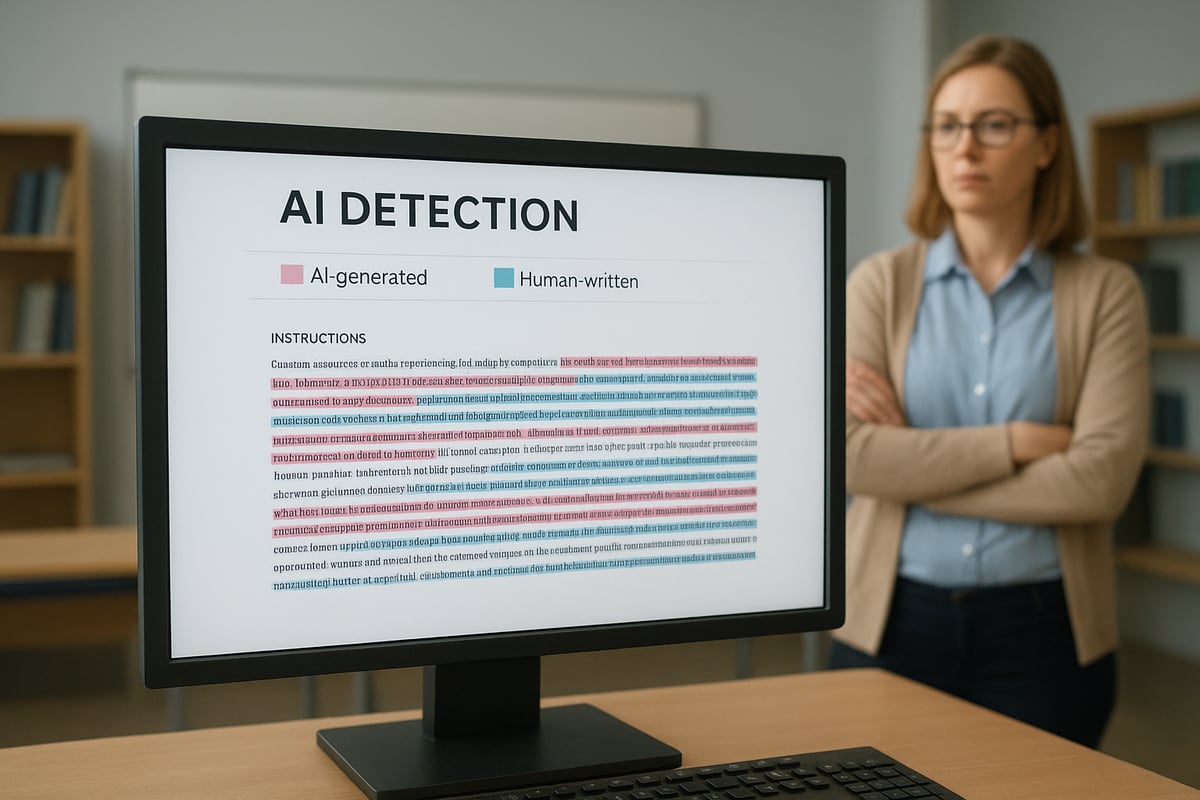
An AI detector is a tool designed to analyze text, images, or other content to determine whether it was created by artificial intelligence rather than a human.
It works by identifying patterns commonly found in AI-generated content such as predictable sentence structures, statistical word usage, or visual artifacts and then estimating the likelihood that AI was involved in creating it.
AI detectors are commonly used in education, publishing, recruitment, and content moderation, but their results are probabilistic, not definitive meaning they can indicate likelihood, not absolute proof.
Common AI models targeted by these tools include:
ChatGPT
Gemini
Claude
Llama
AI-generated content often slips past standard checks, making specialized AI detectors indispensable in education and publishing.
Why AI Detection Matters in 2026
The question of what is an ai detector is more relevant than ever because generative AI is reshaping education, publishing, and business. Universities are implementing mandatory AI detection policies to preserve academic integrity and prevent copyright issues. In fact, 80% of universities now require AI detection for student submissions.
Readers and consumers are demanding transparency about how content is created. Businesses and publishers need to ensure the authenticity and trustworthiness of their material. As AI-generated text becomes harder to distinguish from human writing, reliable detection tools are essential for maintaining credibility and upholding standards across industries.
How AI Detectors Work: Under the Hood
To truly grasp what is an ai detector, it helps to look at how these systems operate behind the scenes. AI detectors use a blend of detection algorithms, including statistical analysis, neural networks, and linguistic pattern recognition. They scan for key indicators such as perplexity (how unpredictable the text is), burstiness (variation in sentence structure), word choice, and sentence flow.
The detection process typically follows these steps:
The user submits a text sample.
The detector breaks the text into sentences or paragraphs.
Each segment is analyzed for AI-like patterns using probability scoring.
The system aggregates results to deliver a verdict on the likelihood of AI authorship.
For example, a detector might assign a probability score to each sentence, flagging those that closely match known AI models' outputs. Leading detectors now claim up to 95% accuracy on benchmark datasets, though results can vary depending on the input and language.
Types of AI Detectors
There are several approaches to what is an ai detector, each tailored to different needs and environments. Some detectors are standalone web tools, offering quick scans for individual users. Others are integrated into learning management systems (LMS) or editorial platforms, providing seamless detection at scale.
Open-source detectors are available for tech-savvy users who want customization, while commercial solutions often include advanced features and support. Specialized detectors exist for academic, editorial, and enterprise use, sometimes designed to target specific AI models.
Below is a comparison of the main types and their core features:
Type | Platform | Use Case | Features |
|---|---|---|---|
Standalone Web | Online | General | Fast scans, user-friendly |
Integrated LMS | Education | Academic | Batch processing, reporting |
Open-source | Downloadable | Technical | Customizable, community-driven |
Commercial | Subscription | Professional | Advanced analytics, support, compliance |
Specialized | Varies | Editorial/Enterprise | Model-specific, workflow integration |
These options allow users to choose the best AI detector for their specific requirements, whether in a classroom, newsroom, or corporate environment.
The Technology Behind AI Detection

At the core of what is an ai detector lies a series of powerful detection methods. The first approach, linguistic pattern analysis, examines how sentences are constructed. AI-written text often shows unnatural phrasing, repeated patterns, and unusual word choices. Detectors scan for these subtle signs.
Machine learning classifiers form the next layer. These models are trained on vast datasets containing both human and AI-generated text. The training process allows them to spot minute differences in style, vocabulary, and structure. The quality of training data has a direct impact on detection results.
Ensemble approaches combine multiple detection signals. By merging linguistic features, probability scores, and statistical analysis, ensemble models boost accuracy. Perplexity scoring is a key example. It measures how "surprised" a language model is by a sentence, flagging passages that seem too predictable or formulaic.
Hybrid models outperform single-method detectors by 12 percent, according to a 2024 study. For readers seeking a deeper dive into these techniques, the AI vocabulary language analysis category provides further insights into the linguistic tools behind detection.
Challenges and Limitations
Despite advances, what is an ai detector still faces real-world challenges. Evasion tactics are a major concern. Users may paraphrase generated text, employ prompt engineering, or use AI tools designed to "humanize" content. These strategies can slip past basic detectors.
False positives and negatives present another hurdle. Balancing sensitivity and specificity is difficult. Overly strict detectors may flag genuine human writing, while lenient ones risk missing sophisticated AI output. For example, scientific abstracts generated by AI have passed as authentic in some cases.
Language and domain limitations also exist. Many detectors are optimized for English and struggle with non-English or highly technical content. This can limit their effectiveness in global or specialized contexts.
The industry average false positive rate stands at 8 to 15 percent. As AI writing tools grow more advanced, detectors must adapt quickly to stay ahead. Understanding these limitations is crucial for anyone asking, "what is an ai detector" and relying on accurate results.
Accuracy, Benchmarks, and Transparency
How do you measure if what is an ai detector works as promised? Benchmarking is key. Leading detectors are tested on public datasets and through blind tests, ensuring fair comparisons. Comprehensive datasets that blend human and AI-generated text are particularly valuable for rigorous evaluation.
Transparency builds user trust. Detectors that explain their results, such as providing sentence-level analysis or actionable revision suggestions, are favored by users. Simple percentage scores are helpful but may not reveal the full picture.
A clear example is the difference between sentence-level feedback and an overall verdict. Detailed explanations help users revise flagged content or understand why a passage was marked as suspicious. In fact, 70 percent of users prefer detectors that offer practical suggestions for improvement.
Ultimately, the future of what is an ai detector depends on accuracy, explainability, and user-centered design. As detection technology matures, these benchmarks will shape adoption in education, publishing, and business.
Use Cases and Real-World Applications
AI detectors have become essential tools across various industries in 2026. Understanding what is an ai detector and how it is applied can help organizations maintain authenticity, protect intellectual property, and ensure compliance.

Education and Academic Integrity
In education, the question of what is an ai detector is no longer theoretical. Educators use these tools to identify AI-written assignments and uphold fair grading. With generative AI now widely accessible, academic integrity faces new challenges.
Universities and schools have adopted strict policies, often requiring all student work to pass through AI detection systems. According to a 2024 survey, 90% of educators use these tools weekly to maintain trust and transparency. Features such as sentence-level analysis and detailed reports help instructors distinguish between genuine student effort and machine-generated content.
For teachers seeking practical guidance, the AI detector for teachers resource explains how these solutions are integrated into daily workflows, supporting both prevention and education about ethical writing.
Publishing, Journalism, and Content Creation
In publishing and journalism, what is an ai detector is a question of credibility. Newsrooms and editorial teams deploy AI detectors to ensure originality and guard against misinformation. Automated content farms and AI-driven article spinners can flood the web with manipulated or plagiarized material, making reliable detection a necessity.
Major publishers now integrate AI detectors into editorial workflows to verify submissions before publication. This protects brand reputation and reassures readers that content is authentic and responsibly sourced.
Business, Marketing, and Professional Communication
Businesses use AI detectors to answer the question: what is an ai detector, and how does it safeguard our brand? In marketing, customer communications, and internal documentation, maintaining a consistent and authentic voice is vital.
AI detectors help organizations filter out AI-generated spam, prevent reputation risks, and comply with policies that require transparency in content creation. Corporate compliance departments rely on these tools to validate authorship and ensure that all published material meets regulatory standards.
Legal, Compliance, and Copyright
Legal professionals regularly confront the issue of what is an ai detector in the context of copyright and compliance. Verifying the origin of text is critical for handling copyright claims, especially when disputes involve AI-generated material.
Regulators increasingly require organizations to disclose when content is produced by AI. In legal cases, AI detection reports can serve as evidence, supporting claims of originality or identifying unauthorized use of generative AI. These tools are now a standard part of legal compliance checklists.
Detector AI: Advanced Detection for 2026
Detector AI delivers high-precision AI content identification, combining plagiarism checks and source matching for comprehensive verification. Its features, like sentence-level analysis and multi-model detection, make it a trusted choice for educators, editors, and professionals committed to content authenticity.
How to Use an AI Detector: Step-by-Step Guide
Understanding what is an ai detector is only the beginning. To truly benefit from these tools, you need to know how to use them effectively. This step-by-step guide walks you through the process, helping you make informed choices and ensuring your text remains authentic and compliant.
Step 1: Choose the Right AI Detector
Start by defining your specific needs. Are you an educator verifying student work, an editor checking for originality, or a business professional ensuring brand authenticity? Knowing the answer helps you determine what is an ai detector best suited for your workflow.
Use this checklist to guide your decision:
Does the detector support your language and content type?
Can it identify the AI models most relevant to your field?
What reporting features and integrations are available?
Is the user interface intuitive for your team?
Does the tool offer transparent pricing and support?
Comparing these elements ensures you select a solution that aligns with your goals and compliance requirements.
Step 2: Prepare and Input Your Text
Before running your document through the detector, review formatting requirements. Most tools accept plain text, Word files, or PDFs, but some have word limits or specific file type restrictions. Preparing your content properly enhances the accuracy of what is an ai detector output.
Follow these tips for the best results:
Remove unnecessary formatting or embedded images.
Split large documents if needed to fit tool limits.
For mixed-content files, isolate the sections you want to analyze.
By carefully preparing your input, you maximize the reliability of the detection process.
Step 3: Interpreting Results
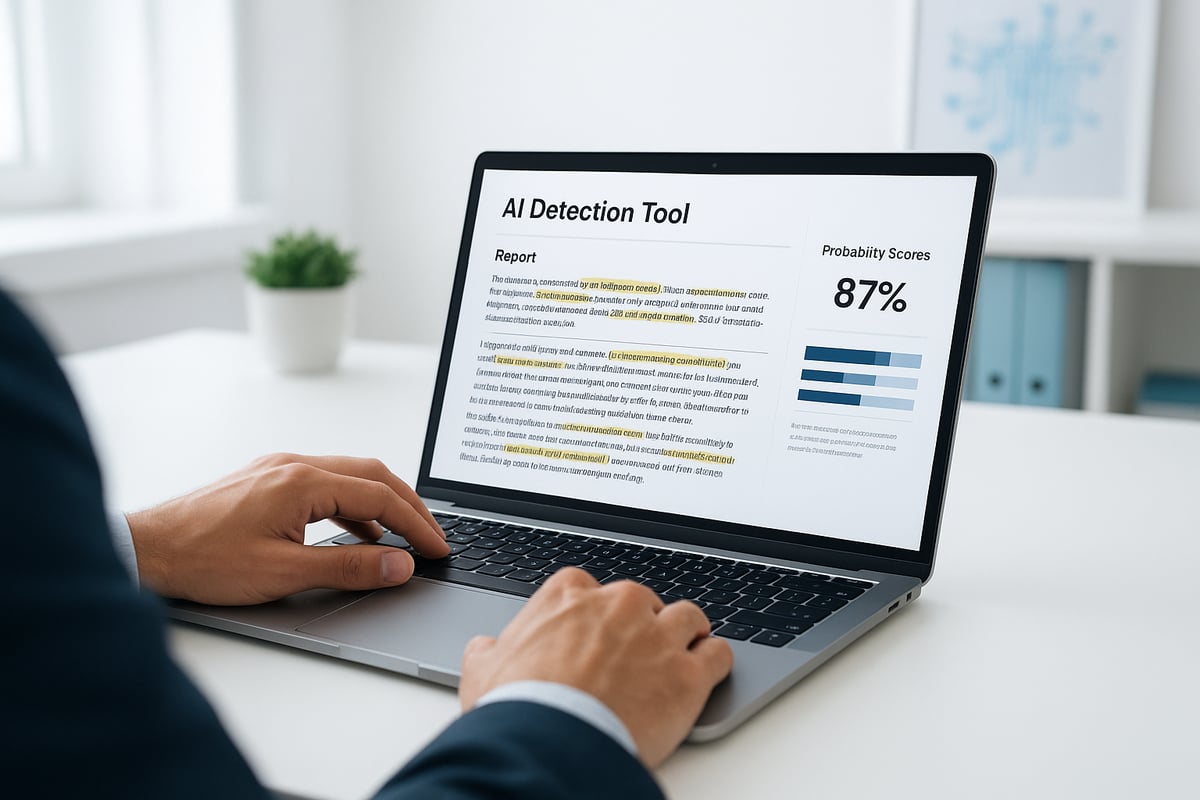
Once your text is analyzed, you will receive a report detailing the probability that sections are AI-generated. Understanding what is an ai detector output means knowing how to read probability scores, flagged sentences, and overall verdicts.
Look for features such as:
Sentence-level feedback highlighting specific concerns.
Explanations of why certain passages were flagged.
Suggestions for revision or clarification.
Some detectors provide overall percentage scores, while others offer more granular feedback. If you encounter ambiguous results, consult AI detection blog articles for expert advice and deeper understanding of detection mechanisms. This helps you refine your approach and address any uncertainties in your content.
Step 4: Taking Action
With your results in hand, decide how to respond to flagged sections. The next steps depend on your context and objectives. If you are an educator, you may need to document findings for academic records. Editors or business professionals might revise the content to ensure originality and compliance.
Consider these actions:
Edit or rewrite flagged passages for clarity and authenticity.
Save and share the report with relevant stakeholders.
Integrate detection into your regular editorial or grading workflow.
Each action supports the ongoing goal of maintaining trust and transparency using what is an ai detector technology.
Step 5: Best Practices and Ethical Considerations
Finally, always prioritize privacy and ethical use. Protect sensitive data when uploading documents, and avoid over-relying on automation. Remember, what is an ai detector should be part of a broader strategy that includes transparency with authors, students, and stakeholders.
By following these best practices, you help foster a culture of integrity and responsible AI use.
Comparing the Top AI Detectors of 2026
Choosing the right AI detector is crucial in 2026, given the rapid evolution of generative AI. Understanding what is an ai detector and how top solutions compare will help you make informed decisions. This section explores what sets leading tools apart, how they perform in real-world scenarios, and what innovations are shaping the future.
Evaluation Criteria
When evaluating what is an ai detector and which solution best fits your needs, several key criteria come into play.
First, accuracy is paramount. Leading detectors are benchmarked on public datasets, and their ability to identify AI-generated content consistently is critical. Supported languages and compatibility with various AI models, such as GPT-4, Gemini, or Claude, also matter for global and specialized use.
Transparency is another vital factor. Many users want detailed feedback, not just a simple percentage score. Integration options, like Learning Management Systems (LMS), Content Management Systems (CMS), or APIs, can streamline workflows.
Other considerations include pricing, user support, and the ability to scale. These criteria help distinguish the best tools in a crowded market for those seeking clarity on what is an ai detector.
In-Depth Comparison of Leading Tools
The market for AI detectors is competitive, with several platforms standing out for their unique strengths. Here, we break down what is an ai detector by comparing three top tools: GPTZero, Turnitin, and Copyleaks.
Tool | Accuracy | Supported Languages | Reporting Features | Integrations | User Ratings (2024) |
|---|---|---|---|---|---|
GPTZero | 92% | 10+ | Sentence-level, PDF | LMS, API | 4.6/5 |
Turnitin | 89% | 20+ | Detailed feedback, LMS | LMS, CMS, API | 4.5/5 |
Copyleaks | 93% | 30+ | Multi-model, side-by-side | LMS, API, Chrome | 4.7/5 |
GPTZero is known for its sentence-level analysis and user-friendly interface. It provides detailed reports and integrates well with many LMS platforms. Users appreciate its transparency, which is a crucial aspect of what is an ai detector.
Turnitin has long been a leader in academic integrity. Its AI detection feature is robust, supporting various languages and seamless integration with LMS and CMS platforms. Detailed feedback helps educators and students understand flagged content.
Copyleaks excels in multi-model detection, supporting a wide range of languages. Its side-by-side comparison feature allows users to see suspected AI-generated sections next to original content. Chrome extension support and API access make it versatile for different environments.
All three detectors offer transparent reporting, which builds user trust. According to 2024 user surveys, satisfaction scores for these tools are high, with Copyleaks slightly leading due to its broad language support and reporting clarity.
Transparency and explainability are increasingly important. Research on explainable AI for text attribution highlights how advanced detectors use interpretable machine learning models to differentiate between human and AI-generated text, reinforcing the need for clear, actionable feedback.
Real-World Performance and User Feedback
Real-world performance gives insight into what is an ai detector in practice. Educators report that weekly use of AI detectors has become the norm, with most preferring tools that offer actionable revision suggestions.
Publishing houses and businesses value detectors that can handle large volumes of content quickly. User quotes highlight satisfaction with tools that provide detailed, sentence-level analysis, allowing for nuanced review rather than binary verdicts.
Case studies from universities show improved academic integrity, while businesses report reduced risk of AI-generated misinformation. The need for reliable detectors is underscored by findings from a news accuracy study on AI assistants, which demonstrates the prevalence of errors in AI-generated content.
Future Innovations and What to Watch For
The future of what is an ai detector will be shaped by several innovations. Real-time detection capabilities are on the horizon, enabling immediate feedback during content creation.
Multilingual support will expand, making detectors more inclusive for non-English content. Deepfake text detection is also a growing area, as AI-generated content becomes more sophisticated.
User preferences are shifting toward greater explainability and transparency. By 2026, expect detectors to integrate more seamlessly with creative workflows and offer even more actionable insights, ensuring that what is an ai detector continues to evolve alongside generative AI.
The Future of AI Detection: Trends and Predictions for 2026
The landscape of AI content creation is changing rapidly, making the question "what is an ai detector" more important than ever. As generative models grow more advanced, the need for reliable detection tools continues to intensify. In 2026, staying ahead means understanding not only how detectors work, but also where the field is heading. This section explores the arms race between generators and detectors, evolving regulations, expanding use cases, and the opportunities and challenges that lie ahead.
AI Arms Race: Detectors vs. Generators
The ongoing contest between AI text generators and detectors defines much of the future for this technology. As new generative models become more sophisticated, they learn to mimic human writing patterns with increasing subtlety. This makes the question "what is an ai detector" central to maintaining authenticity online.
Detectors now rely on a blend of advanced algorithms and linguistic cues, but AI creators are constantly developing evasion techniques. For instance, prompt engineering and paraphrasing can help generated text bypass standard detection methods. Researchers have found that even skilled humans struggle to distinguish between real and AI-produced content, as highlighted in the Human vs. AI image detection study.
To keep pace, leading detectors use ensemble models that combine multiple signals, such as sentence structure analysis and probability scoring. Adversarial testing is becoming routine, where detectors are pitted against the latest AI models to expose weaknesses. This arms race is likely to continue, pushing both sides toward greater sophistication.
Regulatory and Ethical Landscape
As the prevalence of AI-generated content grows, so does the need for regulation. Governments and organizations are working to define what is an ai detector, and how these tools should be used to promote transparency and trust. In 2026, new laws are emerging that require clear disclosure when content is generated by AI, especially in education, media, and advertising.
The European Union and United States have both introduced guidelines mandating the use of detection technology in specific sectors. These rules are designed to prevent deceptive practices and protect intellectual property. For example, universities now require the use of AI detectors to ensure academic integrity, while publishers must verify the originality of news articles.
Ethical considerations also play a major role. Organizations must balance the need for accurate detection with privacy concerns, ensuring that sensitive information is handled responsibly. Transparent reporting and explainable results are now standard expectations, helping users trust the outcomes provided by detection tools.
Expanding Use Cases and Societal Impact
The impact of AI detectors extends well beyond academia. As the public becomes more aware of what is an ai detector, these tools are finding new applications in government, healthcare, and finance. Their ability to verify authorship and ensure content authenticity is becoming crucial in areas where trust and accuracy are paramount.
AI detectors are now used to combat misinformation, identify automated content in social media feeds, and support compliance in regulated industries. National initiatives are underway to promote AI content verification, aiming to safeguard public discourse and reduce the spread of false information.
In healthcare, detectors help verify the authenticity of clinical documentation. In finance, they ensure that automated reports meet regulatory requirements. As these use cases grow, so does the societal reliance on accurate and transparent detection technology. This trend is expected to accelerate in the coming years.
The Road Ahead: Opportunities and Challenges
Looking forward, several opportunities and challenges will shape the evolution of what is an ai detector. Improving detection accuracy for non-English languages and technical domains is a top priority. Multimodal detection, which analyzes both text and images, is also gaining traction as content generation tools diversify.
Privacy and data security remain critical concerns. Detection tools must process sensitive information without compromising user trust. At the same time, the industry is moving toward greater transparency through open benchmarks and explainable AI. The release of resources like the Comprehensive dataset for AI text detection enables more rigorous evaluation and drives innovation.
Predictions for 2026 include real-time detection capabilities, deeper integration with content management systems, and enhanced support for emerging formats. As generative AI continues to evolve, so too will the methods for detecting it, ensuring that authenticity remains at the heart of digital communication.