
Plagiarism is a growing concern in the digital era, especially as content creation surges in 2026. With academic institutions, businesses, and creators facing new challenges, knowing what is the best plagiarism checker is more important than ever. This article reviews and compares seven essential tools, highlighting their unique features, selection criteria, and who benefits most from each. If you want to protect your work and ensure originality, read on for expert insights and practical guidance.
Comparison of the 7 Best Plagiarism Checkers in 2026
Choosing the right plagiarism checker in 2026 requires understanding each tool’s unique strengths and limitations. While some platforms excel in academic precision and AI detection, others focus on usability, affordability, or seamless web integration. The table below provides a clear, side-by-side comparison of the seven leading plagiarism detection tools highlighting their key advantages and potential drawbacks to help you determine which solution best fits your needs.
Tool | Pros | Cons |
|---|---|---|
Detector AI | • Combines AI and plagiarism detection in one scan | • Pricing details require direct inquiry |
Turnitin | • Extensive academic database | • Expensive for individual users |
Grammarly Plagiarism Checker | • Integrates grammar, style, and plagiarism checking | • Requires Premium subscription |
Scribbr | • Pay-per-use model—no subscription needed | • Limited scalability for frequent users |
Quetext | • Affordable with free and Pro plans | • Limited database in free plan |
Unicheck | • Real-time plagiarism detection | • Pay-per-document model for individuals |
Copyscape | • Accurate for web content and SEO | • No academic database |
Why Plagiarism Checking Matters in 2026
In 2026, plagiarism checking has become a critical safeguard for academic, professional, and creative integrity amid the rapid rise of AI-generated content and digital information exchange. As artificial intelligence enables effortless text generation and content replication, ensuring originality is no longer optional but essential for maintaining credibility, compliance, and trust.
Advanced plagiarism detection systems now play a vital role in verifying authorship, protecting intellectual property, and upholding ethical standards across education, research, and publishing. In an era where authenticity defines value, effective plagiarism checking stands as a cornerstone of responsible and transparent content creation.
The Rise of Digital Content Creation
The digital landscape has experienced an explosion in online publishing, academic submissions, and AI-generated content. This rapid growth has made the question, what is the best plagiarism checker, increasingly relevant. Unintentional and intentional plagiarism are now more prevalent, especially with the ease of copying and reusing information online.
A recent study revealed that 95% of students admitted to cheating or committing plagiarism at least once in their academic careers, highlighting the urgent need for reliable plagiarism detection. For more insights into these trends, see this Plagiarism rates in academic institutions report.
Legal, Academic, and Professional Repercussions
Plagiarism carries significant consequences across academic, legal, and professional fields. Institutions and businesses are paying closer attention, recognizing that choosing what is the best plagiarism checker is not just about convenience but also about protecting reputations and avoiding costly disputes.
Academic penalties, legal actions, and loss of professional credibility are all possible outcomes. In fact, 58% of businesses have faced copyright problems due to copied content. These risks make robust plagiarism checking a necessity for anyone producing original work.
The Evolving Nature of Plagiarism
Plagiarism is no longer limited to direct copying. Sophisticated paraphrasing tools and AI-generated text have made detection more challenging. This shift means that what is the best plagiarism checker must now include advanced detection algorithms and AI integration.
Modern tools are evolving to identify not just copied text but also subtle rewording and AI-assisted writing. Sentence-level analysis and AI vocabulary detection are becoming vital features to keep pace with these emerging threats.
Who Needs Plagiarism Checkers?
The need for reliable plagiarism checking extends far beyond academia. In 2026, those asking what is the best plagiarism checker include students, educators, researchers, content creators, publishers, and businesses.
Use cases are diverse:
Academic submissions such as essays and research papers.
SEO content for websites and blogs.
Journalism and news reporting.
Corporate documents and internal communications.
Each group requires tailored features to match their specific needs and workflows.
Key Criteria for Choosing a Plagiarism Checker
When assessing plagiarism checkers, several key criteria should guide your decision:
Criteria | Why It Matters |
|---|---|
Accuracy | Ensures reliable detection |
Database Size | Bigger coverage means better results |
AI Detection | Crucial for spotting AI-generated text |
Reporting | Transparent, actionable feedback |
Usability | Easy for all users to navigate |
Pricing | Fits individual or institutional budgets |
Selecting what is the best plagiarism checker involves balancing these factors to match your use case and budget. A tool’s ability to integrate with your workflow and provide detailed, easy-to-read reports is now just as important as detection accuracy.
7 Best Plagiarism Checker Tools 2026
Selecting what is the best plagiarism checker in 2026 means evaluating a landscape of highly advanced solutions. Each tool excels in specific areas, from AI-generated content detection to seamless integration with writing platforms. Below, we explore the seven most essential options, highlighting their features, pricing, ideal users, and what sets each apart. This guide will help you match what is the best plagiarism checker to your exact needs.
1. Detector AI
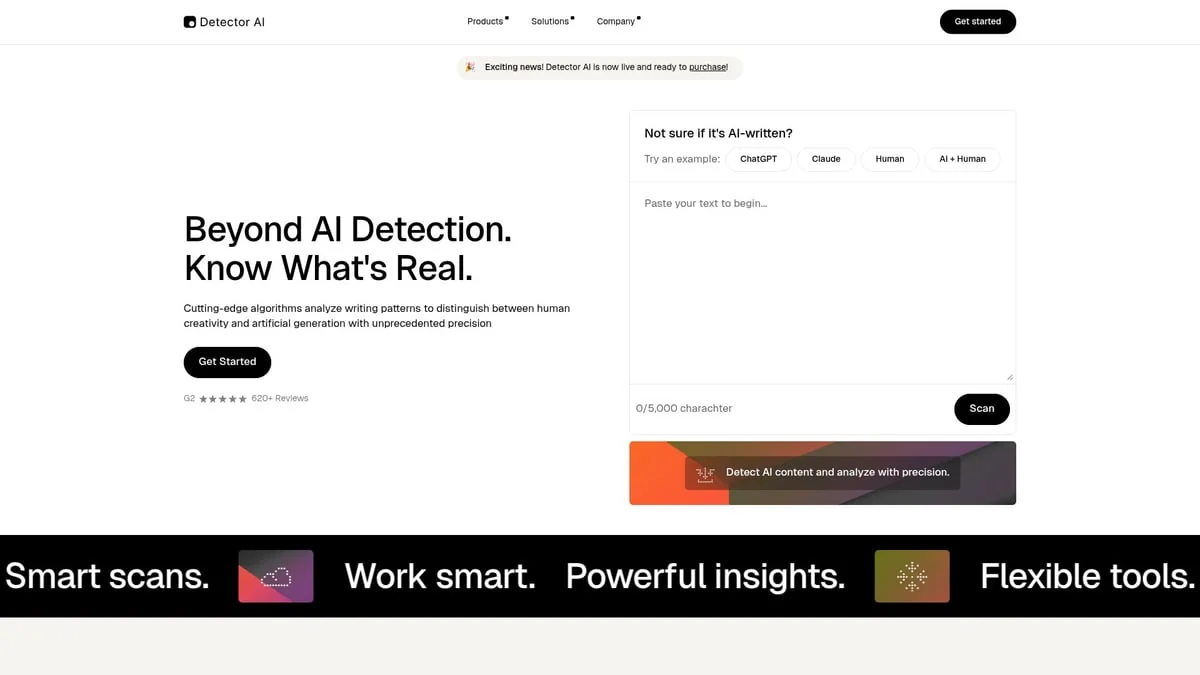
For anyone searching for what is the best plagiarism checker that combines AI detection with traditional plagiarism analysis, Detector AI is a standout. Its pricing structure is detailed on their pricing page, and a demo is available for hands-on evaluation.
Core Features:
AI-generated content detection (covers ChatGPT, Gemini, Claude, more)
Plagiarism checking with source matching
Sentence-level analysis
AI vocabulary finder for advanced detection
Multi-model support
User-friendly interface
Detector AI is unique because it integrates both AI and plagiarism checks in a single scan. This dual approach saves time and increases transparency for educators and professionals. Reports are detailed, offering sentence-by-sentence feedback that is easy to interpret.
Key Benefits:
Industry-leading accuracy, independently benchmarked
No technical skills required to use
Trusted by over 1,000 users, with a 98% satisfaction rate
Ideal For:
Educators, editors, students, professionals, businesses
Pros:
Transparent, detailed reports
Seamless user experience
Cons:
Pricing details require inquiry
English language focus
Detector AI's integrated approach to AI and plagiarism detection makes it an essential answer for those asking what is the best plagiarism checker in 2026. For a deeper dive into its advanced features, see the Plagiarism checker tool overview.
2. Turnitin
Turnitin remains the gold standard for academic institutions determining what is the best plagiarism checker. Its institutional licensing model targets universities, colleges, and schools, making it less accessible for individual users.
Core Features:
Extensive academic database
Real-time originality reports
AI writing detection
Grading and feedback tools
Turnitin stands out for its integration with learning management systems. Educators rely on its comprehensive database to ensure originality in student work.
Key Benefits:
Trusted by educators worldwide
Robust analytics and detailed reports
Deep LMS integration
Ideal For:
Academic institutions, universities, colleges
Pros:
Comprehensive database coverage
Reliable AI-generated content detection
Cons:
Expensive for individuals
Not ideal for non-academic use
Its reputation, combined with advanced AI detection, makes Turnitin a top choice for institutions asking what is the best plagiarism checker for academic integrity.
3. Grammarly Plagiarism Checker
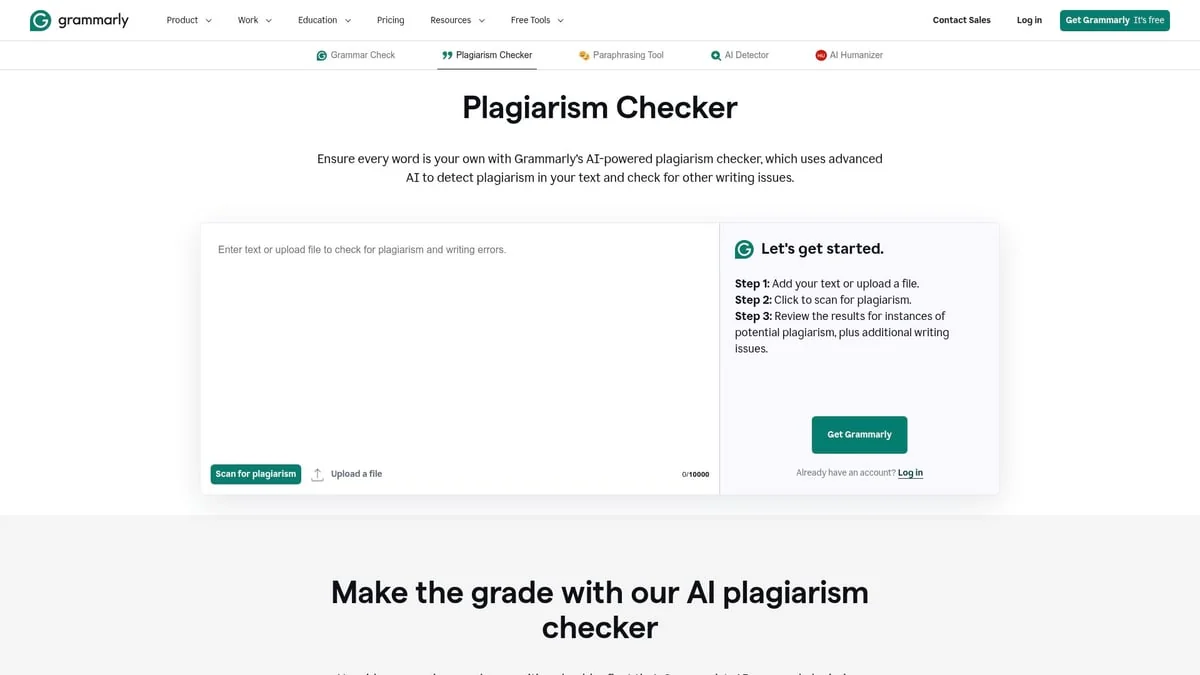
If you need what is the best plagiarism checker for multi-functional writing support, Grammarly Plagiarism Checker excels. It is included with Grammarly Premium, starting at $12/month.
Core Features:
Integrated plagiarism scanning
Grammar, spelling, and style checks
Citation suggestions
Real-time feedback
Grammarly offers a seamless experience, combining writing enhancement and plagiarism detection. It integrates with browsers and Microsoft Office, allowing users to check content as they write.
Key Benefits:
User-friendly and fast
All-in-one tool for students and professionals
Combines grammar and plagiarism in one workflow
Ideal For:
Students, writers, professionals who want comprehensive support
Pros:
Seamless integration
AI-powered suggestions
Cons:
Requires subscription
Smaller database than academic-focused tools
Grammarly is perfect for users seeking what is the best plagiarism checker that simplifies and improves writing quality in real time.
4. Scribbr Plagiarism Checker
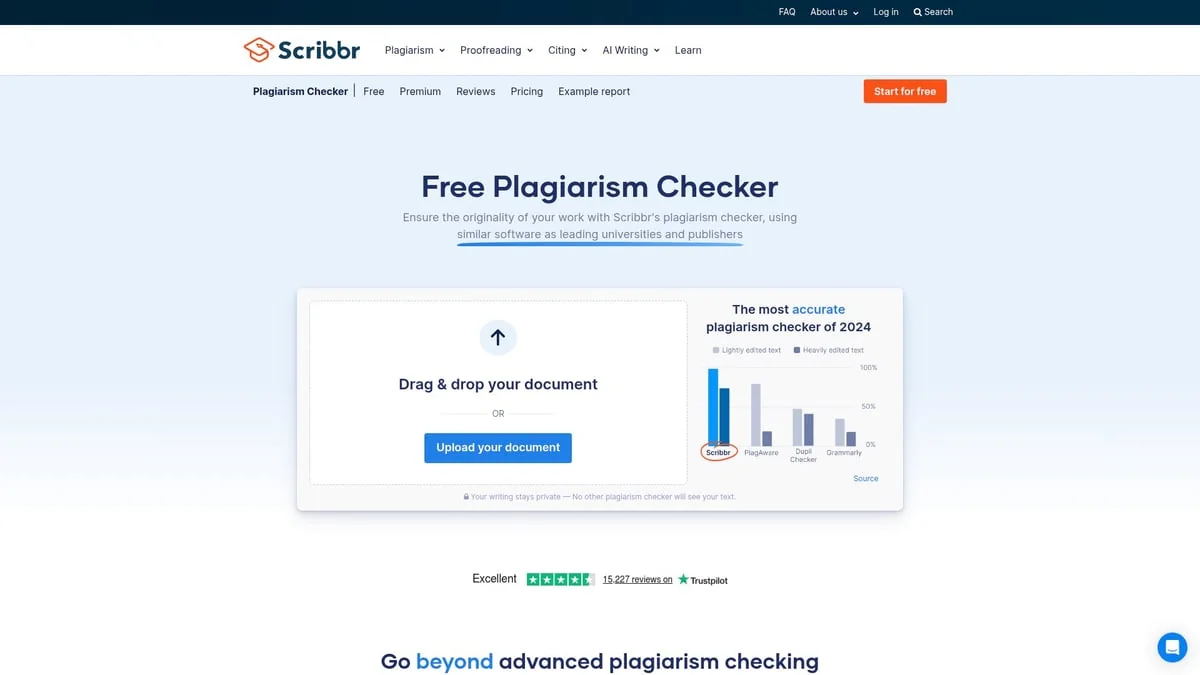
When students and researchers ask what is the best plagiarism checker for academic documents, Scribbr stands out. Its pricing is based on a one-time fee per document, starting from $19.95.
Core Features:
Comprehensive plagiarism scan
Similarity percentage and detailed reporting
Citation improvement recommendations
Supports multiple file types
Scribbr focuses on academic needs, providing visual feedback and easy-to-understand reports. Its citation checker helps ensure academic integrity.
Key Benefits:
No subscription required
Clear, actionable feedback
Designed for student workflows
Ideal For:
University students, thesis writers, academic researchers
Pros:
Pay-per-use flexibility
Citation analysis
Cons:
Not suited for frequent checks
Focused on academic content
Scribbr is an essential tool for those who prioritize what is the best plagiarism checker for academic writing and citation accuracy.
5. Quetext
Quetext appeals to users searching for what is the best plagiarism checker that balances affordability and usability. It offers a free basic version, with a Pro plan starting at $8.25/month.
Core Features:
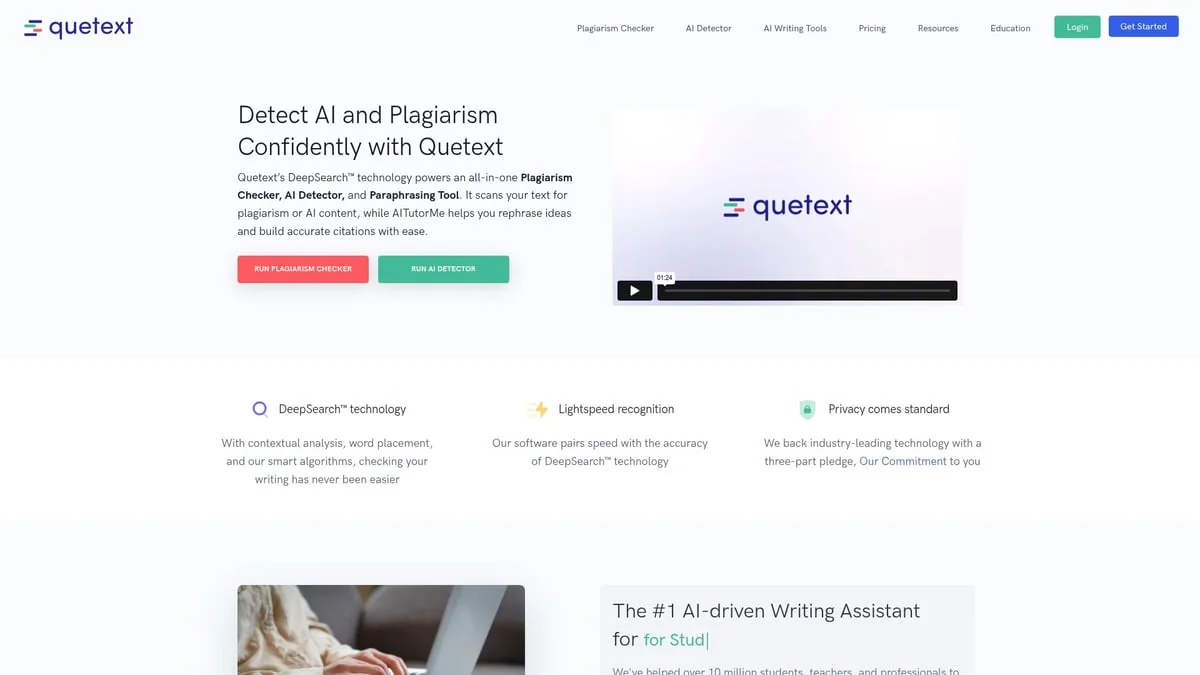
DeepSearch technology and contextual analysis
Color-coded feedback for easy scanning
Citation assistant
Supports multiple languages
Quetext's intuitive interface and visual feedback system make it accessible for bloggers, freelance writers, and educators.
Key Benefits:
Affordable pricing tiers
Easy navigation, visual highlights
Multilingual support
Ideal For:
Bloggers, educators, small businesses, freelancers
Pros:
Generous free tier
Color-coded results
Cons:
Limited database for free users
Some features are Pro-only
For those who want what is the best plagiarism checker with a focus on simplicity and value, Quetext is a strong contender.
6. Unicheck
For educational institutions and teachers evaluating what is the best plagiarism checker, Unicheck delivers real-time detection and seamless integration. Individual pricing starts at $5 per document, with options for institutional licensing.
Core Features:
Real-time plagiarism detection
Cloud-based platform
Integration with Google Classroom, Canvas
Bulk checking for large batches
Unicheck is tailored for collaborative academic environments. Its cloud-based approach and LMS integration streamline workflows for educators.
Key Benefits:
Fast processing and scalable for institutions
Real-time collaboration tools
Secure cloud storage
Ideal For:
K-12 schools, universities, educators
Pros:
Easy LMS integration
Scalable for large organizations
Cons:
Pay-per-document model for individuals
Academic focus
Unicheck answers what is the best plagiarism checker for educators who require real-time, collaborative checking and robust integration.
7. Copyscape
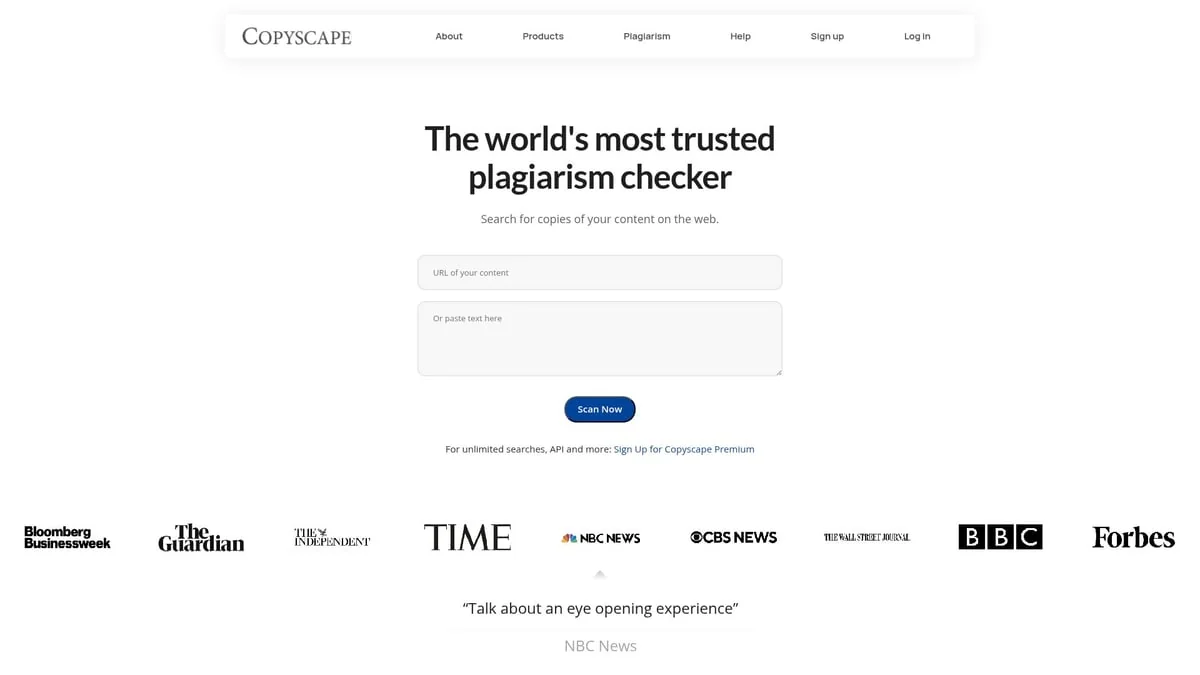
When online publishers and marketers ask what is the best plagiarism checker for web content, Copyscape is a trusted choice. It operates on a pay-per-search basis, charging $0.03 per 200 words, with premium plans for bulk users.
Core Features:
Web content scanning
Batch search capabilities
Private index for premium users
Side-by-side comparison tool
Copyscape is noted for its speed and accuracy in detecting duplicate web content, making it ideal for website owners and SEO agencies.
Key Benefits:
Affordable for occasional users
Simple and efficient interface
Reliable for online content
Ideal For:
Website owners, SEO professionals, content marketers
Pros:
Accurate web search
Batch checking available
Cons:
No academic database
Limited to web content
Copyscape remains an industry favorite for those seeking what is the best plagiarism checker for digital publishing and SEO.
How to Choose the Right Plagiarism Checker for Your Needs
Selecting what is the best plagiarism checker for your needs requires a thoughtful approach. There is no universal solution, as each tool offers distinct features and caters to different audiences. Begin by identifying your primary objectives, then weigh technical capabilities, usability, and overall value.
Assessing Your Use Case
Start by clarifying your main purpose for using a plagiarism checker. Are you a student submitting academic papers, a business publishing web content, or an educator reviewing assignments? Each scenario demands different functionalities.
Students and educators often need tools with robust academic databases and citation support.
Content creators may prioritize web coverage and SEO compatibility.
Businesses look for compliance features and scalable solutions.
For students, consider platforms tailored to academic standards. For inspiration, explore plagiarism solutions for students to see what is the best plagiarism checker for educational needs.
Comparing Database Coverage and Detection Capabilities
A critical factor in choosing what is the best plagiarism checker is the size and diversity of its database. The most effective tools scan academic journals, web content, and proprietary sources.
Evaluate:
Academic versus web-focused databases
Frequency of updates
Ability to detect AI-generated and paraphrased content
With the rise of AI writing tools, advanced detection is more important than ever. For deeper insights, consult the impact of AI on plagiarism detection and understand how modern tools are adapting.
Evaluating Reporting and Usability
A plagiarism checker's value depends not just on detection but on how it presents results. Detailed, user-friendly reports make it easier to address issues.
Look for:
Visual highlights and similarity percentages
Sentence-level analysis
Actionable recommendations
Consider platforms that provide clear feedback and easy navigation. For ongoing updates, review blog insights on plagiarism detection to stay current on usability trends and reporting standards. This step ensures what is the best plagiarism checker for your workflow is also the most practical.
Pricing Models and Value for Money
Pricing varies widely across plagiarism checkers. Some offer subscriptions, others charge per document, and a few provide institutional licenses. Determine your usage volume and frequency.
Compare:
Subscription vs. pay-per-use
Free tiers and trial options
Bulk pricing for teams
Make sure you balance affordability with the features you need. The right pricing model ensures that what is the best plagiarism checker for your budget also meets your expectations.
Integration and Workflow Compatibility
Finally, assess how well the tool fits into your daily routine. Does it integrate with your learning management system, Google Docs, or content management platforms? Seamless connections save time and reduce errors.
Look for:
LMS, browser, and cloud integrations
Batch checking and automation features
Mobile compatibility
Choosing what is the best plagiarism checker involves more than technical specs. It is about selecting a solution that aligns with your goals, fits your workflow, and delivers consistent, trustworthy results.
Conclusion
In 2026, plagiarism detection is no longer a background process it is a vital component of digital integrity across education, publishing, and business. With the surge of AI-generated and paraphrased content, choosing the right plagiarism checker depends on understanding your unique needs, whether that’s academic rigor, SEO accuracy, or enterprise-level compliance. The seven tools reviewed each offer distinct advantages, from Detector AI’s dual detection power to Turnitin’s institutional trust and Copyscape’s web-focused precision. Ultimately, the best plagiarism checker is the one that integrates seamlessly into your workflow, ensures transparency, and reinforces authenticity in every piece of content you create.