Plagiarism Detection
January 12, 2026
What Do Teachers Use to Check for Plagiarism: A 2026 Guide
Digital resources are everywhere, making it easier for students to access and share information. At the same time, new technology has also made it simpler for educators to uncover copied or unoriginal work.
In 2026, the question of what do teachers use to check for plagiarism is more important than ever. Teachers now rely on a mix of advanced tools, artificial intelligence, and proven strategies to uphold academic honesty in the classroom.
This guide will show you how plagiarism detection has changed, highlight the most effective tools, walk through the step-by-step process teachers follow, and explain how AI plays a role. You will also find practical tips for prevention and answers to the most common questions educators face today.
The Evolution of Plagiarism Checking in Education
As digital resources expand, educators face a rapidly shifting landscape in academic integrity. The question of what do teachers use to check for plagiarism is now more complex than ever. With new technologies and challenges, understanding this evolution helps both teachers and students navigate the modern classroom.
The Growing Challenge of Plagiarism in 2026
In 2026, the prevalence of AI writing tools and easily accessible online materials has changed how students approach assignments. What do teachers use to check for plagiarism now must address not only traditional copy-paste but also AI-generated content. Student behaviors are shifting, with motivations ranging from pressure to succeed to lack of understanding on proper citation.
Recent statistics show that 58% of students admit to some form of plagiarism, a figure highlighted in the Plagiarism Statistics 2025 report. Digital submissions and remote learning have made it easier for students to access and reuse online information, further complicating detection.
Early Methods vs. Modern Solutions
Decades ago, what do teachers use to check for plagiarism looked very different. Educators relied on manual reading and intuition, sometimes typing suspicious phrases into search engines. This approach was time-consuming and often missed sophisticated copying or paraphrasing.
Today, automated tools and integrated platforms have largely replaced these methods. Modern solutions offer batch processing, detailed reports, and the ability to scan vast databases, making detection more efficient and reliable for teachers.
Key Milestones in Detection Technology
What do teachers use to check for plagiarism has evolved through several technological milestones. The introduction of Turnitin and similar platforms marked a turning point, allowing widespread automated screening. The emergence of AI-powered plagiarism checkers provided deeper analysis, including the detection of paraphrased and AI-generated text.
Integration with Learning Management Systems (LMS) further streamlined the process, making plagiarism checking a seamless part of digital assignment workflows.
The Role of Policy and Education
Institutional policies play a crucial role in deciding what do teachers use to check for plagiarism. Schools and universities often mandate specific tools or platforms, ensuring consistency and fairness. Teacher training and awareness programs equip educators with the skills to interpret reports and address issues appropriately.
A notable example is the university-wide adoption of mandatory plagiarism checks, which standardizes detection and reinforces academic integrity across entire institutions.
Impact on Student Outcomes and Academic Integrity
The evolution of plagiarism detection has had a clear deterrence effect. Students are more likely to produce original work when they know their assignments will be checked. The quality of student writing has improved, as detection tools encourage careful research and citation.
However, educators must balance trust with enforcement. Overreliance on technology can impact student-teacher relationships, so clear communication and education about plagiarism remain essential.
Popular Plagiarism Detection Tools Used by Teachers in 2026
Educators in 2026 have access to a diverse set of powerful plagiarism detection tools. With the rise of digital assignments and AI-generated content, knowing what do teachers use to check for plagiarism is more important than ever. This section explores the top platforms, their unique features, and how they fit into the modern classroom.
Turnitin: The Industry Standard
Turnitin remains the gold standard when educators consider what do teachers use to check for plagiarism. Its robust database, which includes academic journals, web content, and student papers, provides comprehensive originality checks. The platform integrates seamlessly with popular LMS platforms like Canvas, Moodle, and Blackboard, streamlining the submission and review process.
Teachers benefit from detailed originality reports that use color-coded highlights to indicate matching or similar content. Turnitin’s similarity scoring helps educators quickly gauge potential issues. More than 35,000 institutions worldwide trust Turnitin, making it a top choice for maintaining academic integrity.
Key features:
Extensive database coverage
LMS integration for workflow efficiency
Clear, actionable originality reports
Despite its strengths, some educators note that Turnitin requires institutional licensing and can flag properly cited or common knowledge content, so review is always needed.
Grammarly and Its Plagiarism Checker
Grammarly has evolved from a grammar and style assistant to a valuable tool for those wondering what do teachers use to check for plagiarism. Its built-in plagiarism checker scans assignments in real time, providing immediate feedback for both teachers and students.
Grammarly’s user-friendly interface allows for grammar, spelling, and originality checking in a single workflow. This can be especially helpful for formative assessments and draft reviews. However, Grammarly’s plagiarism detection is not as deep as dedicated platforms like Turnitin, as it relies on a more limited database.
Pros:
Real-time feedback for rapid revisions
Combined grammar and plagiarism checks
Accessible browser and desktop apps
Cons:
Less comprehensive plagiarism database
Not always suitable for final, high-stakes assessments
For many teachers, Grammarly is an excellent supplementary tool, especially when students are encouraged to self-edit before submission.
Unicheck and Similar Platforms
Unicheck is a cloud-based solution gaining popularity among those exploring what do teachers use to check for plagiarism. Its real-time scanning and user-friendly dashboard make it suitable for individual and group assignments alike.
Unicheck offers robust collaboration features, allowing multiple educators to review submissions and share feedback. It integrates with major LMS systems, ensuring smooth assignment collection and analysis. Data privacy is a top priority, with strict security protocols to protect student information.
Key benefits:
Fast, cloud-based plagiarism scanning
Group assignment and collaboration support
Strong data privacy and security measures
Unicheck’s flexibility and accessibility make it a strong contender for institutions of all sizes.
Copyscape and Web-Based Solutions
For teachers handling blog submissions, creative writing, or web-based assignments, Copyscape is often what do teachers use to check for plagiarism. This platform specializes in comparing content against a vast array of web pages, making it ideal for non-academic and public-facing work.
Copyscape’s interface is straightforward, allowing quick checks for copied online material. Teachers can review highlighted matches and trace sources easily. However, Copyscape is less effective for academic papers or assignments that require deep database searches.
Best for:
Web content and student blogs
Creative writing and journalism courses
Quick, surface-level originality checks
Limitations include limited academic database access and a focus on web sources rather than scholarly publications.
Free Tools: Plagscan, SmallSEOTools, and Others
Budget-conscious educators often ask what do teachers use to check for plagiarism when resources are tight. Free tools like Plagscan and SmallSEOTools provide accessible options for smaller institutions or individual teachers.
These platforms offer basic similarity scanning, usually with word or file size limits. They are helpful for quick checks or early drafts, but their database coverage and accuracy may not match paid solutions.
Pros:
No cost for basic functionality
Simple, user-friendly interfaces
Useful for smaller classes or informal assignments
Cons:
Limited depth and accuracy
Fewer database sources
Ads and restricted features in some tools
Free tools are best used as preliminary checks or for student self-assessment, rather than as the sole method for high-stakes evaluations.
Detector AI: Advanced AI-Generated Content and Plagiarism Detection
Detector AI is redefining what do teachers use to check for plagiarism in 2026. This platform uniquely combines AI-generated content detection with traditional plagiarism analysis, providing sentence-level insights and probability scores for each section of text.
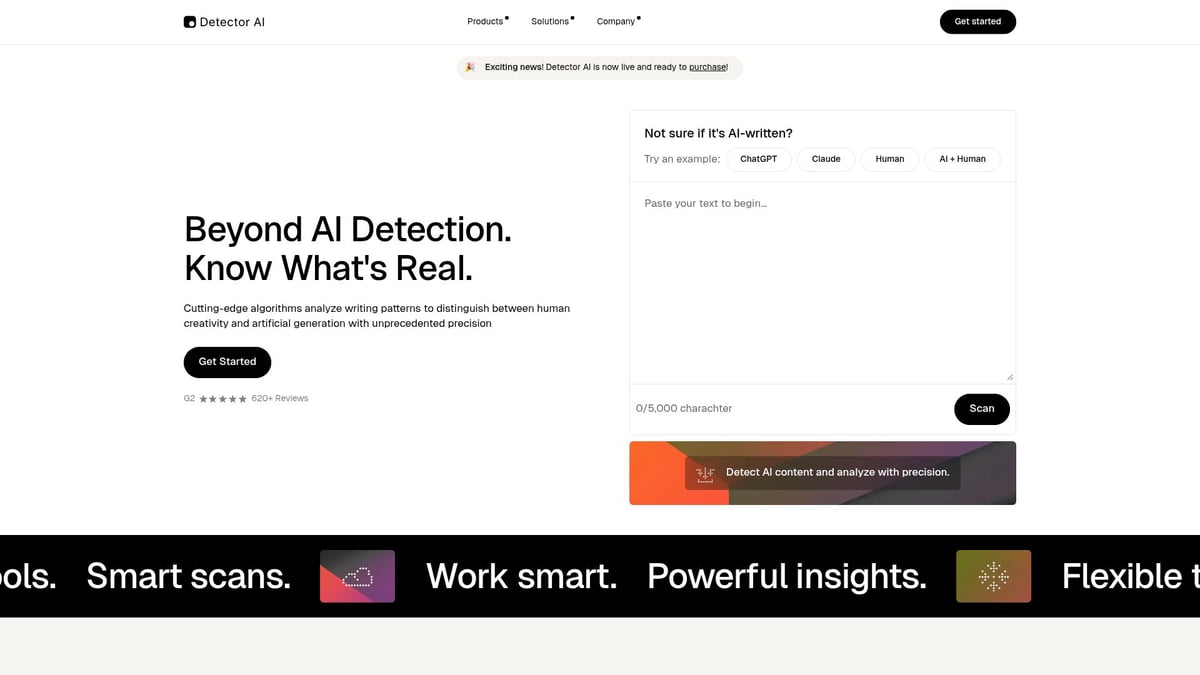
Detector AI leverages multi-model detection, identifying content created by tools like ChatGPT, Gemini, and Claude. Its unified scanning process delivers a single report covering AI-generated text, traditional plagiarism, and matched sources. Bibliography suggestions and integrated source matching simplify follow-up for teachers.
Educators value Detector AI for its transparency and accuracy, especially as AI writing tools become more prevalent in student work. The platform is trusted for both routine checks and complex investigations.
For more information about advanced capabilities, teachers can explore the Plagiarism checker for teachers resource for a deep dive into its features and educator-focused design.
Detector AI is designed for seamless integration into academic workflows, supporting teachers, editors, and students in maintaining content authenticity.
How Teachers Check for Plagiarism: Step-by-Step Process
Checking for plagiarism is now a systematic process supported by innovative technology. Teachers follow a clear, multi-step workflow to maintain academic integrity in 2026. Understanding what do teachers use to check for plagiarism helps clarify how each stage contributes to reliable, fair assessment.
Step 1: Gathering and Preparing Student Submissions
The first step is collecting assignments in digital formats, most often through Learning Management Systems (LMS) or secure email. Teachers ensure files are compatible for scanning, such as PDF, DOCX, or TXT formats.
Organization is crucial. Assignments are sorted by class, section, or due date, making batch processing efficient. Teachers double-check that all files are correctly labeled to prevent confusion during scanning.
Before moving forward, educators verify each submission is ready for analysis. This early preparation is essential when considering what do teachers use to check for plagiarism, as it sets the stage for accurate detection.
Step 2: Selecting the Appropriate Detection Tool
Choosing the right tool depends on several factors. Teachers consider assignment type, institutional policy, and the features of available software. Paid platforms like Turnitin or Detector AI offer comprehensive analysis, while free tools serve smaller institutions or specific needs.
Educators often consult plagiarism detection insights to stay updated on new strategies and technologies. This helps them decide what do teachers use to check for plagiarism most effectively, ensuring the chosen tool aligns with academic standards and privacy requirements.
Step 3: Uploading and Scanning Documents
Once the detection platform is selected, teachers upload individual or batch files for scanning. Most systems support drag-and-drop uploads, making the process seamless.
Teachers confirm all documents are recognized. They select batch or single-scan options, depending on class size and deadlines. Average processing times vary from a few seconds to several minutes for larger files.
Throughout this step, the focus remains on what do teachers use to check for plagiarism, as scanning accuracy and speed are critical for timely feedback.
Step 4: Analyzing the Originality Report
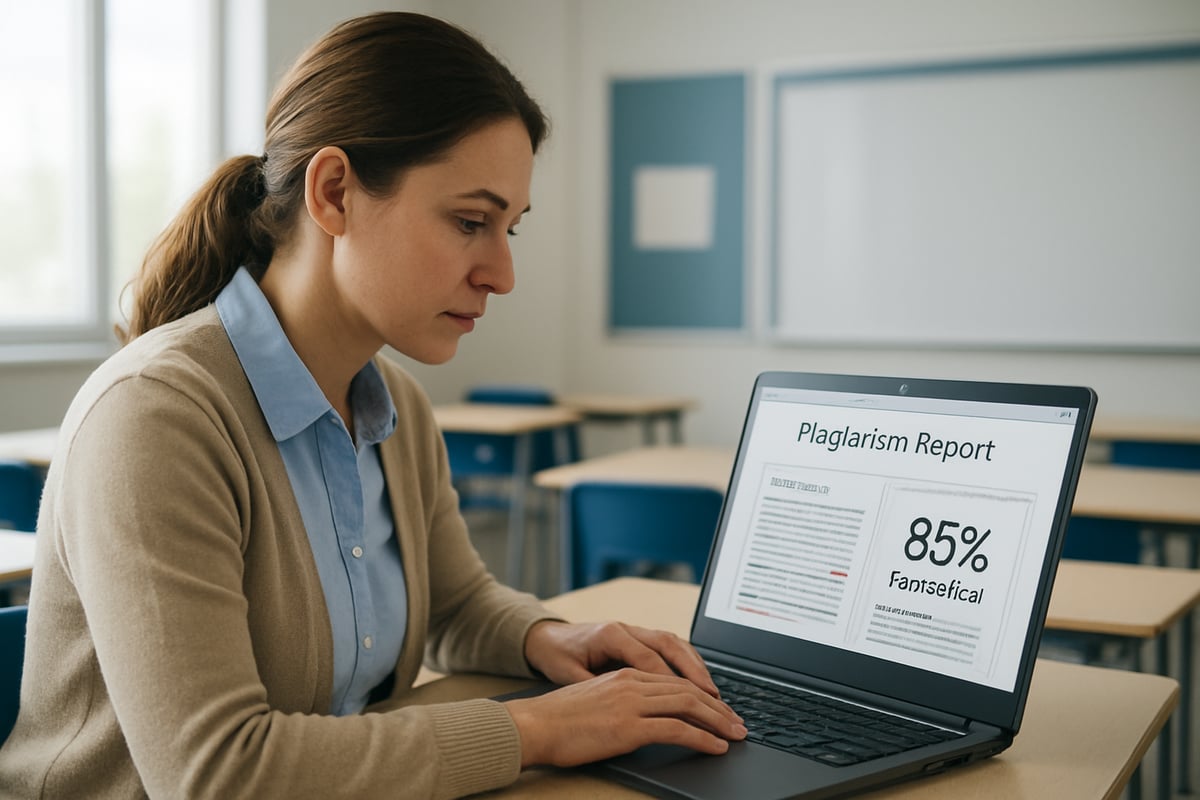
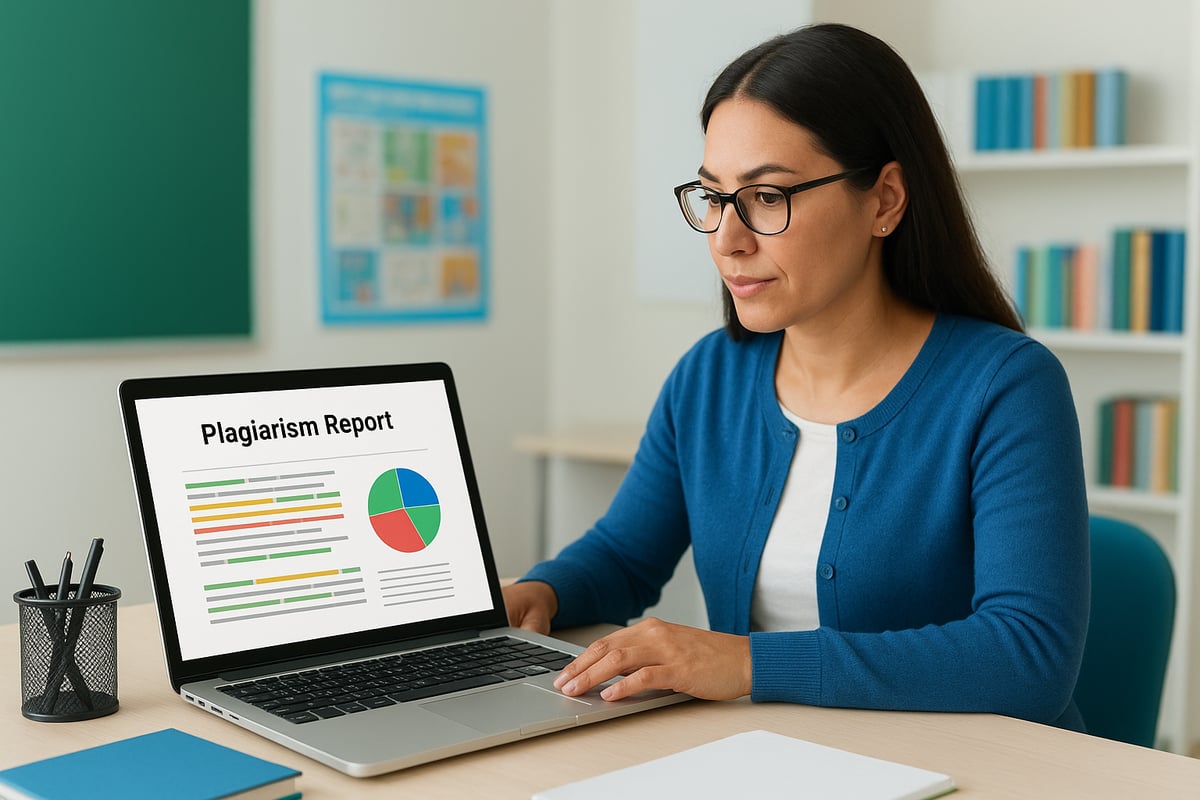
After scanning, teachers receive detailed originality reports. These reports use similarity scores and color-coded highlights to identify matching text, paraphrased content, or AI-generated material.
Educators carefully review flagged sections. They assess whether similarities are due to common phrases, proper citations, or potential plagiarism. Context matters, so teachers avoid relying solely on numerical scores.
Understanding what do teachers use to check for plagiarism at this stage means interpreting data with discernment, balancing technology's findings with professional judgment.
Step 5: Investigating Sources and Context
Teachers cross-check flagged content against bibliographic suggestions or online sources. They determine if the issue stems from improper citation, misunderstanding, or deliberate copying.
Communication with students is often part of this step. Teachers may request clarification or discuss findings to distinguish between accidental and intentional plagiarism.
This investigation is a vital part of what do teachers use to check for plagiarism, ensuring fairness and giving students a chance to explain or learn from mistakes.
Step 6: Taking Appropriate Action
The final step involves responding according to institutional guidelines. Actions range from providing feedback and requesting revisions to escalating cases for disciplinary review.
Teachers document findings and outcomes. They also educate students about proper citation and originality, turning detection into a learning opportunity.
By following this structured approach to what do teachers use to check for plagiarism, educators reinforce academic integrity and support student growth.
The Role of AI in Plagiarism Detection and Academic Integrity
Artificial intelligence has transformed what do teachers use to check for plagiarism. As digital writing tools evolve, AI-powered detection has become a cornerstone of academic integrity. Teachers now rely on advanced systems to analyze not just copied text, but also subtle forms of content misuse.
How AI Enhances Plagiarism Checking
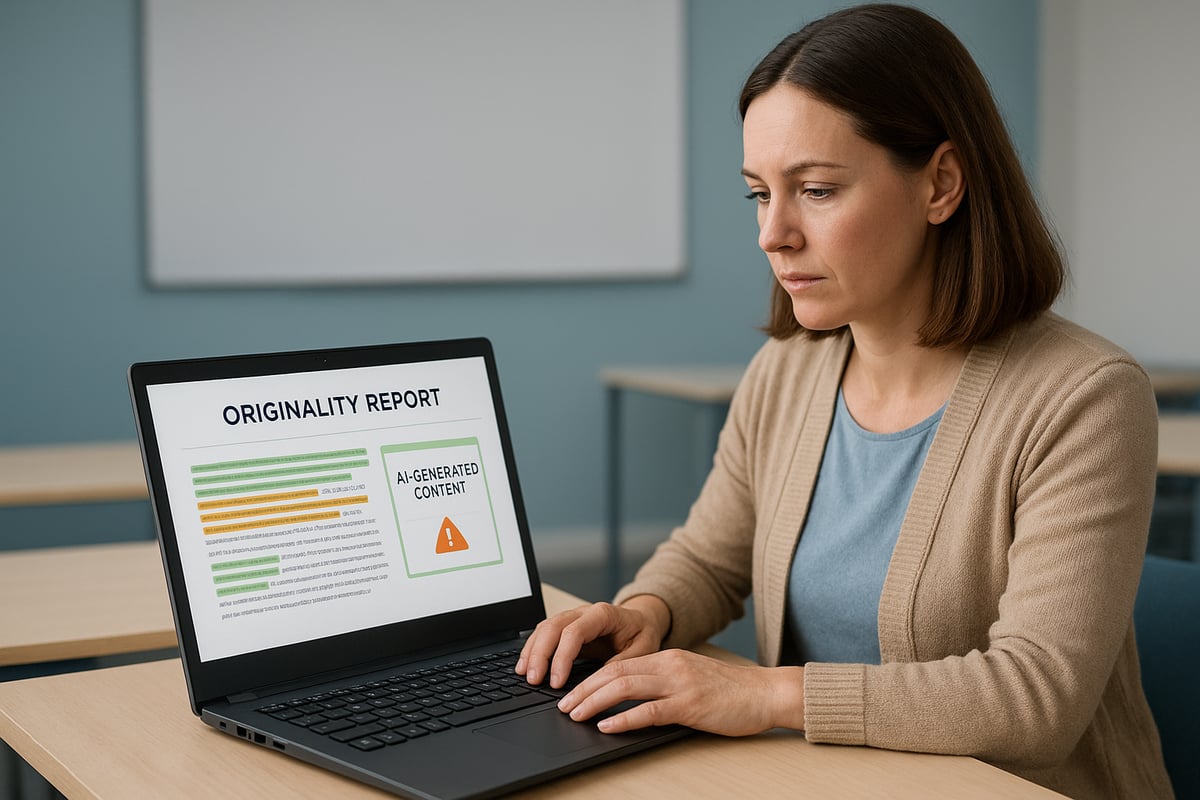
Modern AI tools offer capabilities beyond traditional software. They identify copied text, but also recognize complex paraphrasing, unusual vocabulary shifts, and even AI-generated content. With sentence-level analysis, teachers can pinpoint suspicious passages that older systems might miss.
AI-powered platforms, such as those highlighted in AI detection in education, bring transparency through probability scores and source tracing. For those asking what do teachers use to check for plagiarism in 2026, the answer increasingly involves these advanced, unified solutions.
AI vs. Traditional Plagiarism Detection
Comparing AI to traditional plagiarism checkers reveals key differences. Earlier tools relied on matching exact phrases, leading to missed paraphrased content or higher false positives. AI, however, adapts to new writing styles and detects subtle shifts in tone or structure.
For instance, Detector AI examines vocabulary, sentence length, and linguistic fingerprints. This means what do teachers use to check for plagiarism now includes adaptive algorithms that evolve with emerging student tactics. Accuracy rates are rising, while unnecessary flags are reduced.
Addressing the Challenge of AI-Generated Essays
The rise of AI writing assistants like ChatGPT and Claude has changed what do teachers use to check for plagiarism. Students increasingly use these tools to create essays that evade basic detection.
To counter this, detection platforms employ multi-model analysis. They scan for text patterns typical of AI-generated content and compare them to known outputs. Still, the detection arms race continues, as both AI writers and checkers evolve. Teachers must stay updated on the latest capabilities and limitations.
Ethical and Privacy Considerations
As AI becomes integral to what do teachers use to check for plagiarism, ethical questions arise. Institutions must balance effective monitoring with respect for student privacy and trust.
Key considerations include data storage policies, student consent, and transparent communication about how detection tools operate. Teachers are encouraged to involve students in discussions about academic honesty and the role of AI, fostering a culture of responsibility rather than surveillance.
Future Trends in AI-Driven Academic Integrity
Looking ahead, AI will further shape what do teachers use to check for plagiarism. Predictive analytics may flag at-risk submissions before issues arise. Real-time feedback could help students correct mistakes prior to final submission.
Integration with grading systems is also on the horizon, offering teachers a streamlined workflow. As AI capabilities advance, educators will have more comprehensive tools to uphold academic integrity and support student growth.
Best Practices for Teachers to Prevent and Address Plagiarism
Maintaining academic honesty is a shared responsibility. In 2026, what do teachers use to check for plagiarism is not just about detection but also about prevention and education. The following best practices help educators foster a culture of integrity and ensure students understand the value of original work.
Designing Assignments to Reduce Plagiarism Risk
One of the most effective answers to what do teachers use to check for plagiarism is thoughtful assignment design. By crafting tasks that require personal reflection, unique analysis, or localized examples, teachers make it harder for students to copy or paraphrase.
Use prompts relevant to students' lives or current events.
Break large projects into stages with checkpoints.
Incorporate oral presentations or in-class writing.
Scaffolded assignments encourage students to develop ideas over time. This process minimizes opportunities for last-minute copying and increases investment in authentic learning.
Educating Students About Plagiarism
Another essential element in what do teachers use to check for plagiarism is proactive education. Clear definitions, real-world examples, and frequent discussions demystify academic honesty. Many institutions offer workshops or online modules, but ongoing conversation is key.
Explain types of plagiarism and why it matters.
Provide resources for proper citation and referencing.
Offer access to self-check tools for drafts.
Understanding student attitudes toward plagiarism can help tailor education efforts. When students know what is expected and why, they are more likely to take pride in original work.
Using Detection Tools as Teaching Aids
Modern educators do not limit what do teachers use to check for plagiarism to punitive measures. Instead, they use detection tools as opportunities for growth. By sharing originality reports, teachers help students learn from flagged content and improve their writing skills.
Review similarity scores together and discuss findings.
Allow students to revise based on report feedback.
Highlight the importance of paraphrasing and critical thinking.
Advanced platforms even provide AI vocabulary and language analysis, making it easier for teachers and students to identify paraphrased or AI-generated content. This transparency supports both learning and accountability.
Responding to Detected Plagiarism
When plagiarism is identified, what do teachers use to check for plagiarism guides their response. Differentiating between accidental and intentional cases is crucial. Consistent, fair enforcement of policies builds trust and upholds standards.
Communicate findings clearly and allow students to explain.
Assign revisions or educational tasks for minor infractions.
Escalate serious or repeated cases to administration.
Restorative approaches, such as reflective essays or discussions, can turn incidents into valuable learning experiences.
Collaborating with Administrators and IT
Finally, what do teachers use to check for plagiarism is most effective when supported by a team. Collaboration ensures up-to-date technology, consistent policies, and proper support for both teachers and students.
Regularly review and update detection tools.
Coordinate with administrators on response protocols.
Share successful strategies across departments.
Working together, schools create an environment where academic integrity is the norm and all stakeholders are empowered to support honest work.
Frequently Asked Questions About Plagiarism Checking in 2026
Teachers and students often have questions about what do teachers use to check for plagiarism. Below, we answer some of the most common concerns related to plagiarism detection in 2026, covering tools, technology, and best practices.
What is the most accurate plagiarism checker for teachers?
In 2026, the most accurate solutions include Turnitin, Detector AI, and Unicheck. These platforms provide detailed similarity reports, AI-generated content detection, and seamless integration with popular LMS. When considering what do teachers use to check for plagiarism, these tools stand out for their reliability and depth of analysis.
Can AI-generated content be detected reliably?
Yes, modern tools now offer advanced features to identify content created by AI systems such as ChatGPT or Claude. Detector AI and Turnitin use sentence-level analysis and probability scores. For a deeper look at how AI influences detection, see the Impact of AI on Education.
Are free plagiarism checkers effective for schools?
Free tools like Plagscan and SmallSEOTools can be useful for basic checks or smaller institutions. However, when schools ask what do teachers use to check for plagiarism, most prefer paid platforms for more comprehensive databases, higher accuracy, and institutional support.
How do teachers handle false positives in reports?
Teachers review flagged sections in originality reports to determine if matches are due to proper citation, common phrases, or actual plagiarism. Communication with students and context-based review help resolve most issues, ensuring fairness in the process.
What privacy concerns should teachers consider?
Institutions must comply with data protection laws, ensuring student work is stored securely. Many platforms offer options to exclude submissions from global databases, giving schools control over privacy. Transparency about the process also builds student trust.
How can students self-check their work before submission?
Many institutions provide access to plagiarism checkers so students can review their work ahead of deadlines. Using the same tools that answer what do teachers use to check for plagiarism helps students learn proper citation and avoid unintentional mistakes.
What are the consequences of plagiarism in 2026?
Consequences may range from assignment revisions to formal disciplinary action, depending on intent and institutional policy. Recent Global Plagiarism Trends 2018–2024 show that strict enforcement, paired with education, leads to better academic integrity outcomes for all.